Common Ground
A community engagement strategy for the Altadena rebuild
A collaboration of Altadena Village · CoLab · Alting · Altagether
Presented to CAPS · May 21, 2026
Common Ground
Altadena Village · CoLab · Alting · Altagether
01 / 12
Why we’re here
Altadena’s commercial and public spaces are being rebuilt. There’s no process for the community to shape what they become and see the impact of their input.
Common Ground
Altadena Village · CoLab · Alting · Altagether
02 / 11
Why we’re here
No coordination across scopes, entities, or schedules
Scope
Entity
2026
2027
Mar
Apr
May
Jun
Jul
Aug
Sep
Oct
Nov
Dec
Jan
Feb
Mar
Apr
May
Jun
Jul
Aug
Sep
Oct
Nov
Dec
CIP
LA County Public Works
Survey
Comment period TBD
Land use
LA County Regional Planning (WSGVAP)
Refresh cycle TBD
Sewer
LA County Sanitation
Ongoing rebuild interaction
Water
Las Flores · Lincoln · Rubio Cañon · Foothill
Ongoing restoration & planning
Stormwater
LA County Flood Control
Stormwater windows TBD
Energy
Edison / SCE
Undergrounding & restoration planning — ongoing
Gas
SoCalGas
Gas restoration ongoing
Schools
PUSD · Private
Decisions TBD
Multi-benefit
LA County Parks & Rec
Parks & green corridors TBD
Urban canopy
LA County · TreePeople · Altadena Bloom
Urban canopy restoration TBD
Private rebuild
Outside investments & developers
Active rebuild projects ongoing
New permits & projects TBD
Outreach
Paradigm (for Edison)
Engagement windows TBD
Master plan
Toole (for LA County)
Master plan in progress
No engagement scheduled
And the PFA
The Public Financing Authority is required to meet every two months since January — but hasn’t yet.
Common Ground
Altadena Village · CoLab · Alting · Altagether
03 / 11
What’s missing
Five gaps — and the values that close them
01
Proximity
Neighbors know what their block needs — but there’s no channel for that knowledge to land in County decisions.
02
Local agency
Neighbors have coordinated a shared vision, but no defined path to the County’s infrastructure rollout, between agencies, or with community efforts.
03
Coordination
Agencies plan in parallel, on separate schedules, with no shared way to coordinate.
04
Visibility
Plans, decisions, and deviations are hidden until they’re locked in — and community input disappears into a black box. Visibility goes both ways.
05
Trauma-informed
No engagement design built for a community that’s been through this much.
“Right now recovery feels like attempting to have a sip of water from eight fire hoses that are going on full blast. It’s impossible.” Mike Tuccillo · Altadena resident & block captain
Common Ground
Altadena Village · CoLab · Alting · Altagether
03 / 10
The network we build on
150+ Altagether blocks across Altadena
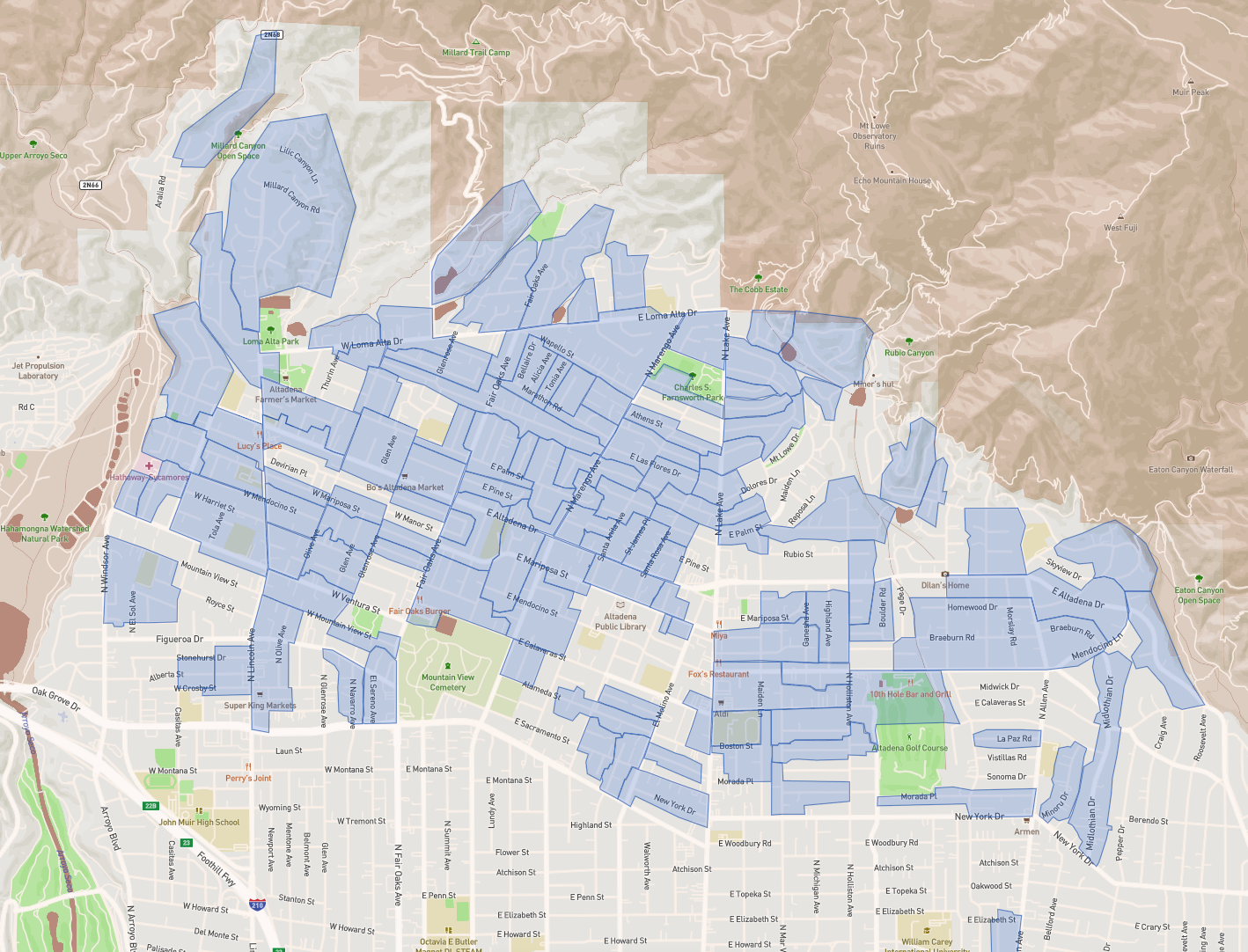
Each shaded area is a block with a captain — the existing distribution and facilitation network this process runs on. Placeholder image
Common Ground
Altadena Village · CoLab · Alting · Altagether
—
What we’re proposing
Five steps — information flows down, consensus flows up
01
↓Scope
Define and gather requirements for ongoing community initiatives such as:
- ARecovery Master Plan / CIP
- BCommercial corridors
- CPublic right-of-way & guidelines
WhoCounty agencies · utilities · developers · consultants · commercial-owner network
05
↑Shared record
The record goes public — tracked on a dashboard, visible to all stakeholders.
WhoAll stakeholders
02
↓Training & Distribution
Through existing channels — Altagether’s 150+ block captains and the commercial-owner network, trained to facilitate with on-call backup.
WhoAltagether + CoLab (training)
04
↑Aggregation
Block deliberations compile into a coherent record — organized by area, corridor, zone, and by the project owner’s own categories. Private dialogue stays private; outcomes become public.
WhoCaptains record · synthesized by AI
03
⟳Facilitating Discussion
Altagether Block Captains facilitate local input sessions, with community support, resources and clear guidelines.
WhoAltagether captains + CoLab · commercial-owner network · Public · Experts
Common Ground
Altadena Village · CoLab · Alting · Altagether
04 / 10
Where we start
Fair Oaks Corridor — Pilot
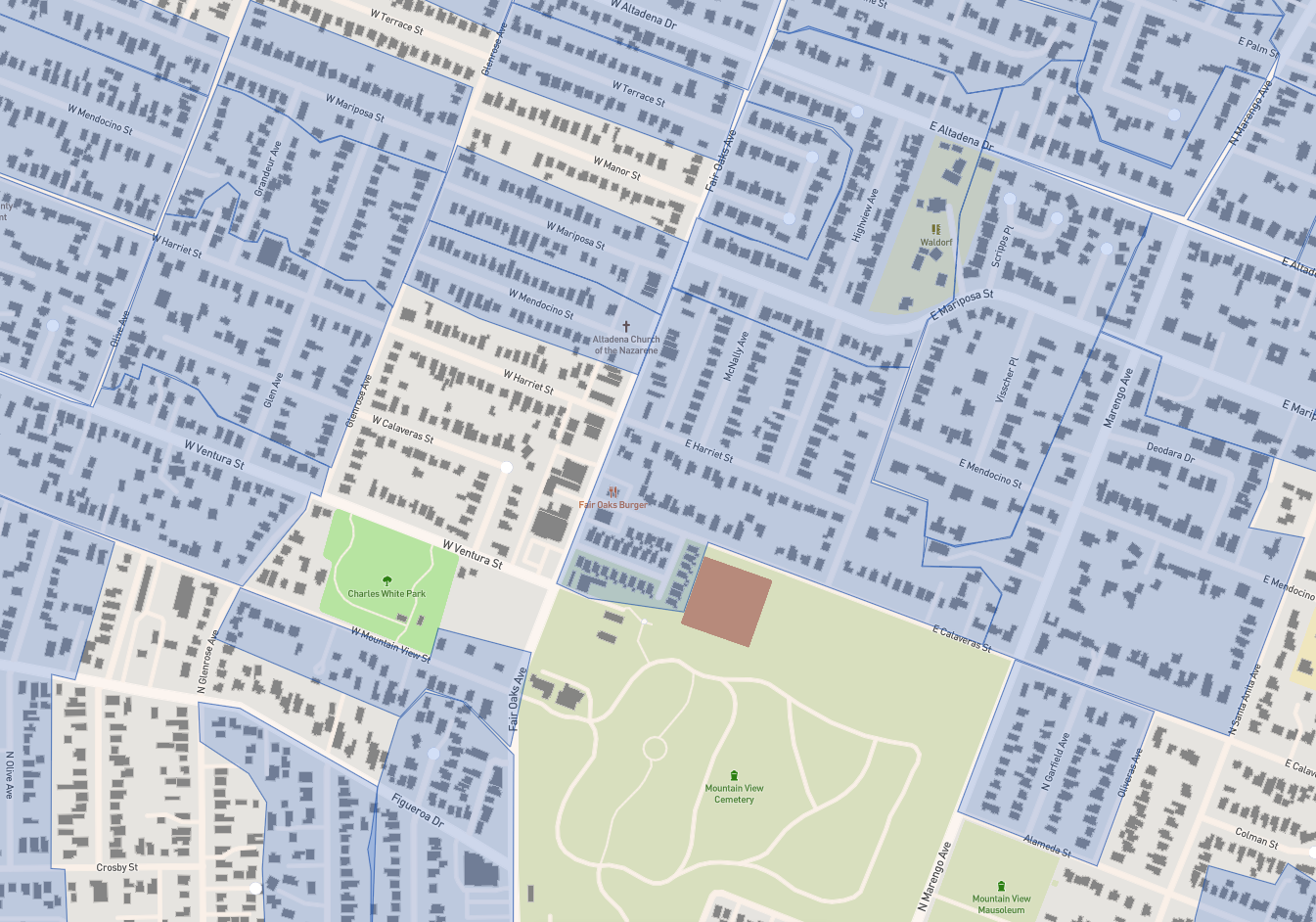
The pilot tests Scope A — getting block-by-block feedback into the Recovery Master Plan before it locks. Fair Oaks North & South residential blocks plus commercial blocks, anchored by a community church. Placeholder image
Common Ground
Altadena Village · CoLab · Alting · Altagether
—
Where we start
Fair Oaks Corridor — Pilot
01
↓Scope
Scope A/C · Recovery Master Plan / CIP (Mobility · Stormwater · Sewer · Water · Energy · Multi-Benefit)
05
↑Shared record
Structured packets to CIP — manually plotted on map. No automated dashboard yet.
02
↓Training & Distribution
Altagether’s 8 block captains and the commercial-owner network, trained to facilitate discussion.
04
↑Aggregation
Compiling decisions and feedback through Google Form and AI notetakers · per-category compilation. Manual aggregation — no dashboard yet.
03
⟳Facilitating Discussion
Ensure distribution of customized Survey, information sessions, discussion groups, Zoom calls — with support from experts and county resources.
Fair Oaks is the hand-hacked version — the framework works while we build the automated tools (real-time dashboard, auto-aggregation) once funded.
Common Ground
Altadena Village · CoLab · Alting · Altagether
07 / 11
Where we start · Work in progress
Fair Oaks Corridor — Pilot
2026
2027
Mar
Apr
May
Jun
Jul
Aug
Sep
Oct
Nov
Dec
Jan
Feb
Mar
Apr
May
Jun
Jul
Aug
Sep
Oct
Nov
Dec
CAPS coalition co-signToday
May 21
ATC Land Use CommitteeBriefing & ratification
Jun–Jul
EIFD advocacyAt PFA hearings
Funding push
Delivery guidelines + Captain toolkitv1 by end of June, then iterate
Build & iterate
Block Captain trainingAltagether facilitation cohorts
Mid-Aug kick-off →
Fair Oaks pilotHand-hacked live use case
Pilot in flight
Dashboard MVPPublic visibility layer
Build & launch
Iterate from pilot
Refine
Scale to additional corridors
Roll out
Common Ground
Altadena Village · CoLab · Alting · Altagether
08 / 11
Who pays
Who pays for what
Project owners
Pay for their own delivery — out of existing project budgets.
EIFDAltadena Wildfire Recovery Infrastructure Financing District (AWRIFD)
Funds the engagement infrastructure — administered through the PFA, a small fraction of the $2B financing layer.
Local professionals
Do the work — expert consultants, facilitators, mediators, legal, translators from inside Altadena, so dollars recirculate.
Common Ground
Altadena Village · CoLab · Alting · Altagether
08 / 10
Team & partners
Team & partners
Collaboration team
Altadena Village
Esther Kim
CoLab
Megan Hinchliffe Gerig · Gabriella Caparco-Robertson
Alting
Petra Wennberg
Altagether
John Mayo · 150+ block captains
Partners
Altadena BloomTy Garrison
Altadena Chamber of CommerceJudy Matthews
Altadena CollectiveChris Corbett
Altadena GreenStephanie Landregan · Wynn Wilson
Altadena HeritageHans Allhoff · Michele Zack
Altadena Town CouncilDorothy Wong · Morgan Whirledge
ARRCAnders Corey
CCARHans Allhoff
Dena HiveDorothy Wong
League of Women VotersJoan Riback
Neighbors Building a Better AltadenaKaren Gibson
NOMASteve Lewis
PUSD School BoardJennifer Hall Lee
SteadfastJodi McLaughlin · Hans Allhoff
WRTTTy Garrison
Common Ground
Altadena Village · CoLab · Alting · Altagether
09 / 10
What we want from you today
Community endorsement — carry it forward.
Today
Buy-in on the overall approach
Next steps
- TodayCAPS coalition co-signs the framework — or surfaces feedback that feeds the next phase
- Today – Jun 4Feedback & refinement — informal conversations from this room outward; integrate inputs from CAPS, ATC, and community partners
- Late MayBuild out the full structured proposal — expand owners, milestones, dependencies, and deliverable specs
- JunOutreach & circulation — share the plan with EFC, ACONA, ART, Altadena Rising, My Tribe Rise, Hands in the Soul, broader CAPS coalition, ATC, partners, and community
- End of JuneWorking group publishes v1 delivery guidelines and block-captain toolkit
- JuneATC Land Use Committee briefing · first captain training cohort scheduled
- Jul – DecPFA hearings: advocate for an EIFD earmark for engagement infrastructure
- Fall 2026Fair Oaks corridor pilot launches using the guidelines
Common Ground
Altadena Village · CoLab · Alting · Altagether
12 / 12